
Tangipahoa Parish Clerk of Court
The Tangipahoa Parish Clerk of Court About page names Gary T. Stanga as Clerk and explains the office's role. The Clerk is elected to a four-year term, serves as ex-officio notary public, parish recorder of mortgages and conveyances, and Chief Elections Officer of the parish. The office also handles court records and public services that residents use for civil cases, criminal files, marriage licenses, successions, jury functions, passports, copies, and record searches.
The state court structure map for Louisiana confirms that Tangipahoa Parish does not split trial-court records between a separate county clerk and district clerk. The Clerk of Court is the central records office for the 21st Judicial District Court in Tangipahoa Parish. City-level and mayor's court matters may still require local court checks, but the Clerk is the main office for district-court records.
Tangipahoa Parish Clerk of Court
Clerk: Gary T. Stanga
110 N Bay Street, Ste. 100
Amite, LA 70422
(985) 748-4146
Fax: (985) 748-6503
Hammond Clerk Office
318-A NW Railroad Avenue
Hammond, LA 70401
(985) 549-1638
Additional public service location
The Clerk's office overview appears in this image from the official About Us page.
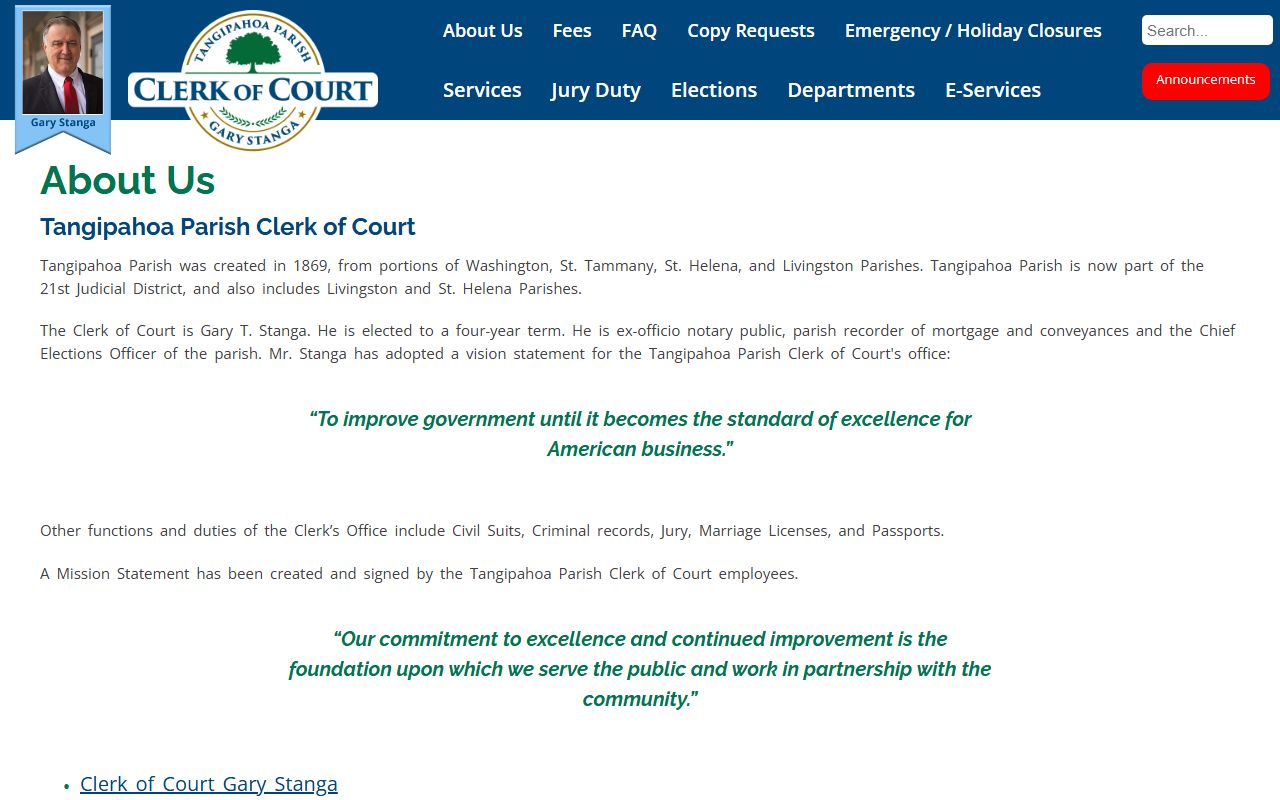
That page is the local source for the Clerk's elected role, recorder duties, election duties, and record-office responsibilities.
Tangipahoa Parish Clerk Record Duties
The Clerk's departments divide work by record type. The Civil Department files civil suits, domestic suits, clerk's suits, adoptions, successions, pleadings, documents, exhibits, citations, writs, subpoenas, and related cost records. The Criminal Department files formal charges from the 21st Judicial District Attorney, handles felony cases and non-municipal misdemeanor cases, issues subpoenas and bench warrants, files extradition papers, sends notices of judgment to bondsmen, maintains affidavits for judgments, and processes expungement work.
- Civil and domestic filings, including successions and adoptions.
- Criminal filings after formal charges from the District Attorney.
- Marriage licenses, original marriage records, and certified marriage copies.
- Mortgage, conveyance, miscellaneous, and historical file-room records.
- Copy Department service by walk-in, mail letter, telephone, and online eSearch.
- Jury, election, passport, recorder, and ex-officio notary functions.
The Clerk's fee landing page is shown in this image from the official fee page.
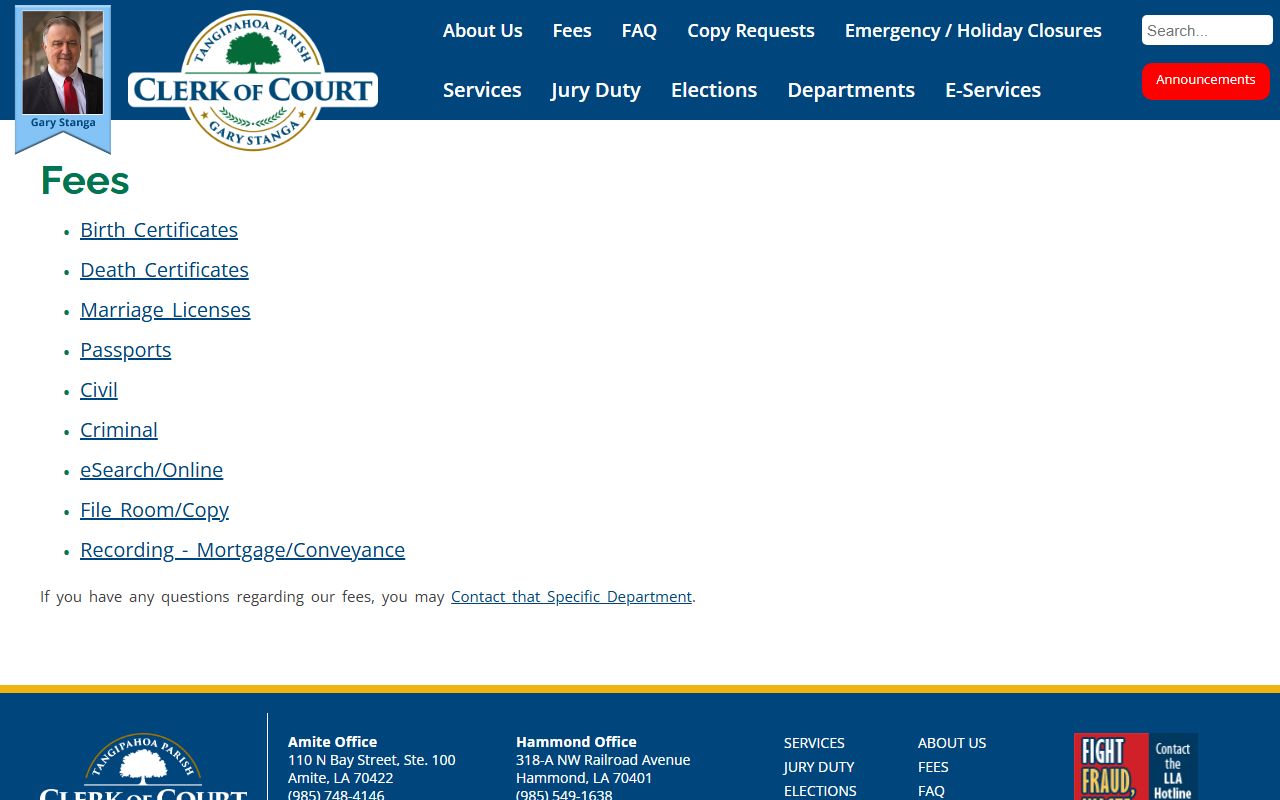
Use that source to move from a broad fee category to the record-specific cost page before filing or requesting copies.
Request Tangipahoa Parish Certified Copies
Certified copies are ordered through the Clerk when a document must carry official court-record proof. Examples include a certified marriage license copy, divorce judgment, civil judgment, succession document, criminal disposition, or another filed record. The File Room and Copy Department page explains that the Copy Department reproduces records, certifies copies, and handles requests by walk-in, mail-in letter, telephone, and online eSearch where the record is available.
- Identify the record type, such as civil, criminal, marriage, succession, mortgage, conveyance, or traffic.
- Gather names, case or docket number, filing date, book and page, instrument number, or other index detail.
- Choose the request channel: eSearch, walk-in at Amite or Hammond, telephone request, or mail letter.
- Ask whether the document needs certification and confirm page, search, certification, and postage costs.
- For sealed or confidential records, obtain a signed court order before requesting copies.
The Amite courthouse and Clerk address source appears in this image from the Clerk's court-address page.
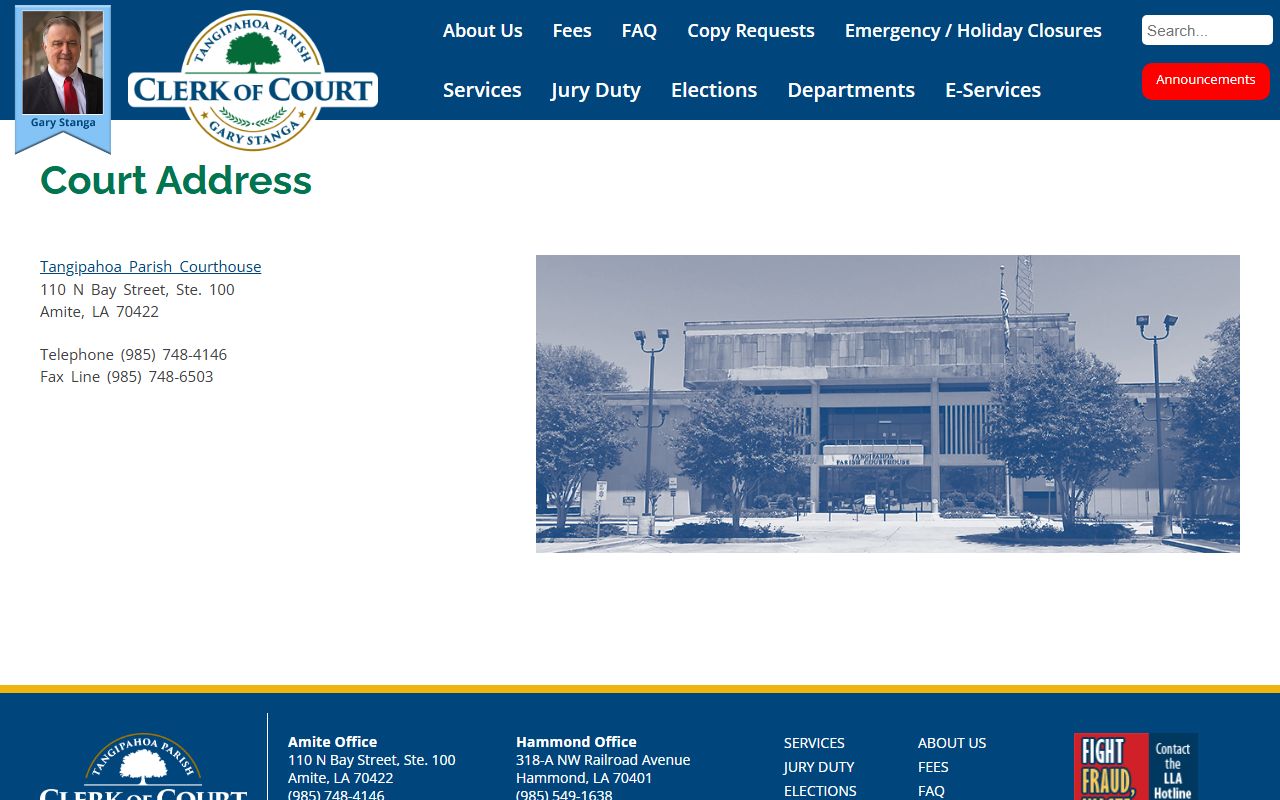
The address page confirms the Clerk's Amite office location, courthouse contact details, and fax number used for office identification.
Tangipahoa Parish Records Request Fields
The research did not find a single universal records request form for every Clerk record type. The practical request fields come from the Clerk's searchable systems and Copy Department instructions. Strong requests identify the record before asking for a copy. Online land and marriage access can use a name, book and page, or instrument number. Civil and criminal files may use party names, suit or docket numbers, and filing details. Historical successions use deceased name.
| Field | Required | Notes |
|---|---|---|
| Record type | Yes | State civil, criminal, marriage, succession, mortgage, conveyance, traffic, or other category. |
| Party or deceased name | Usually | Marriage and succession searches depend heavily on names. |
| Case, docket, book/page, or instrument number | If known | Improves accuracy and may avoid extra search work. |
| Document type | Yes | Examples include judgment, license copy, pleading, order, or certified copy. |
| Certification need | Conditional | Say whether a plain or certified copy is needed. |
| Return method | Yes for mail | Mail requests should include a self-addressed postage-paid envelope or call for postage. |
Tangipahoa Parish Clerk Fees
The Clerk's public fee material gives several fixed costs that appear across record searches. Filing fees can depend on case type and should be confirmed before filing, but copy, certification, search, and subscription costs are clear enough for request planning. The Clerk also notes that civil costs include advance and accrued costs under Louisiana rules when litigation is filed.
| Item | Amount / note |
|---|---|
| Copy Department copy | $1.00 per page |
| Certification fee | $10.00 |
| Marriage license copy | $3.00 per copy |
| Certified marriage license copy | $5.00 per copy |
| Civil/probate search fee | $10.00 |
| Criminal history verification by phone | $20.00 criminal history search fee |
| Civil, criminal, or marriage eSearch subscription | $20 for 24 hours, $40 for 30 days, $300 for 1 year |
| Online printing | $1.00 per page |
Tangipahoa Parish Clerk Forms
The Clerk's Electronic Forms page links forms for civil judge reporting, marriage license applications, officiant affidavits, mortgage cancellation, mortgage certificate requests, liens, assumed names, and e-filing. The form needed depends on the record task. A marriage applicant needs the marriage license application. A mortgage or lien user needs the correct recorder form. A civil filer should confirm whether the matter belongs in Clerk civil filing, e-filing, in-person filing, or attorney courier filing.
- Marriage license application for applicants preparing license information.
- Officiant affidavit for marriage-related filing needs.
- Mortgage cancellation for recorder and mortgage records.
- Mortgage certificate request for property-record certificate work.
- Assumed-name forms for business-name filings listed by the Clerk.
Tangipahoa Parish File Room
The File Room and Copy Department houses mortgage, conveyance, miscellaneous, and civil documents. It also keeps confidential records in a vault, including juvenile protective orders, adoptions, commitments, and sealed records. Those confidential and sealed records may be copied only with issuance of a signed court order by a judge. That rule matters when a requester knows a case exists but cannot view or copy the document through normal public channels.
The File Room and Copy Department page appears in this image from the Clerk's File Room and Copy Department source.
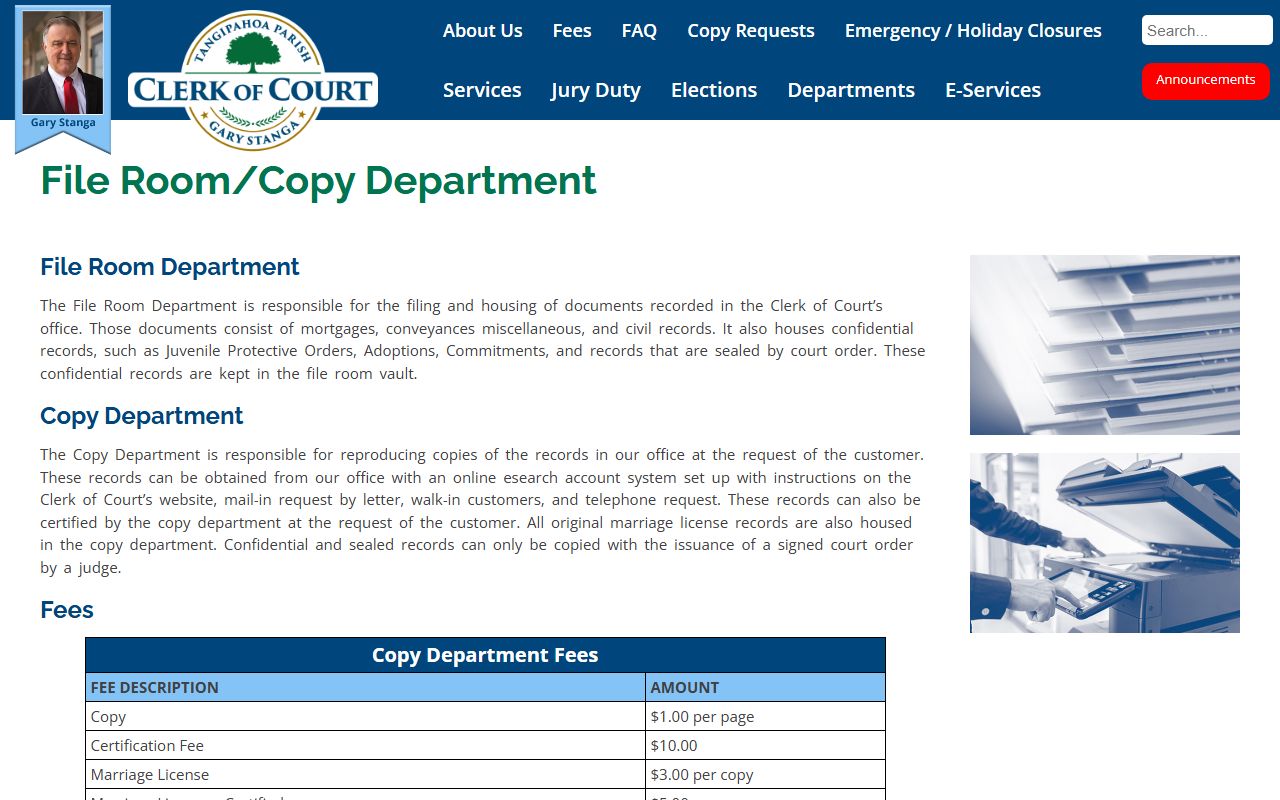
This source is the best local reference for copy channels, certification, vault restrictions, and original marriage-license record housing.
Tangipahoa Parish Clerk Online Access
Online access is divided by record type. The Clerk's eServices menu links civil records, criminal records, marriage licenses, electronic forms, and historical succession indexes. Civil and criminal online access route to Clerk Connect or related subscription tools. Land and marriage access also uses the Cott-hosted eSearch login and statewide LCRAA portal options. The research notes that each online service is a separate membership, so a user with one subscription should not assume access to another record type.
Effective January 1, 2026, Clerk civil and criminal pages say attorneys may file in state district courts and parish courts electronically, in person, or through a court courier or runner, while fax and mail-in filings are not available for attorneys under the Clerk's posted rule summary. Self-represented parties should confirm current filing channels directly with the Clerk before mailing pleadings.
The Louisiana court-structure reference appears in this image from the Louisiana State Bar Association court structure explainer.
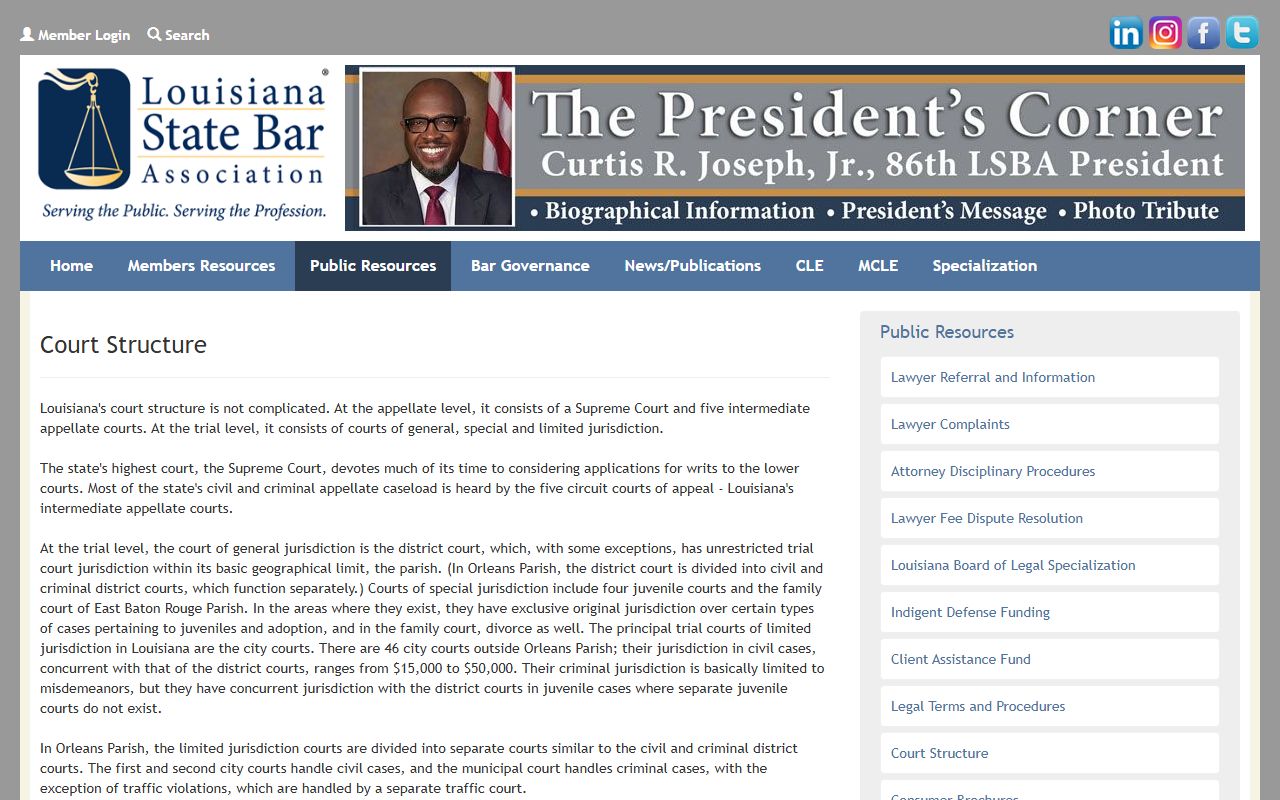
That statewide source supports the local point that district courts are Louisiana's trial courts, while the parish Clerk keeps many of the related records.